

The structural foundation of angle steel lightning protection towers lies in their material selection and structural form. Angle steel, as the main component, is typically manufactured using hot rolling processes, with an L-shaped cross-section. This geometry endows it with high bending strength and torsional stiffness. Mechanically, the equal or unequal leg design of the angle steel can optimize loads in different directions. For example, using equal-leg angle steel at the four corners of the tower helps to evenly distribute wind loads, while using unequal-leg angle steel in areas of localized stress concentration can enhance stability in specific directions. In terms of material physical properties, common steels such as Q235 or Q345 possess sufficient conductivity and mechanical strength. Their yield strength and elastic modulus directly determine the deformation limit of the tower under atmospheric turbulence or lightning strikes.
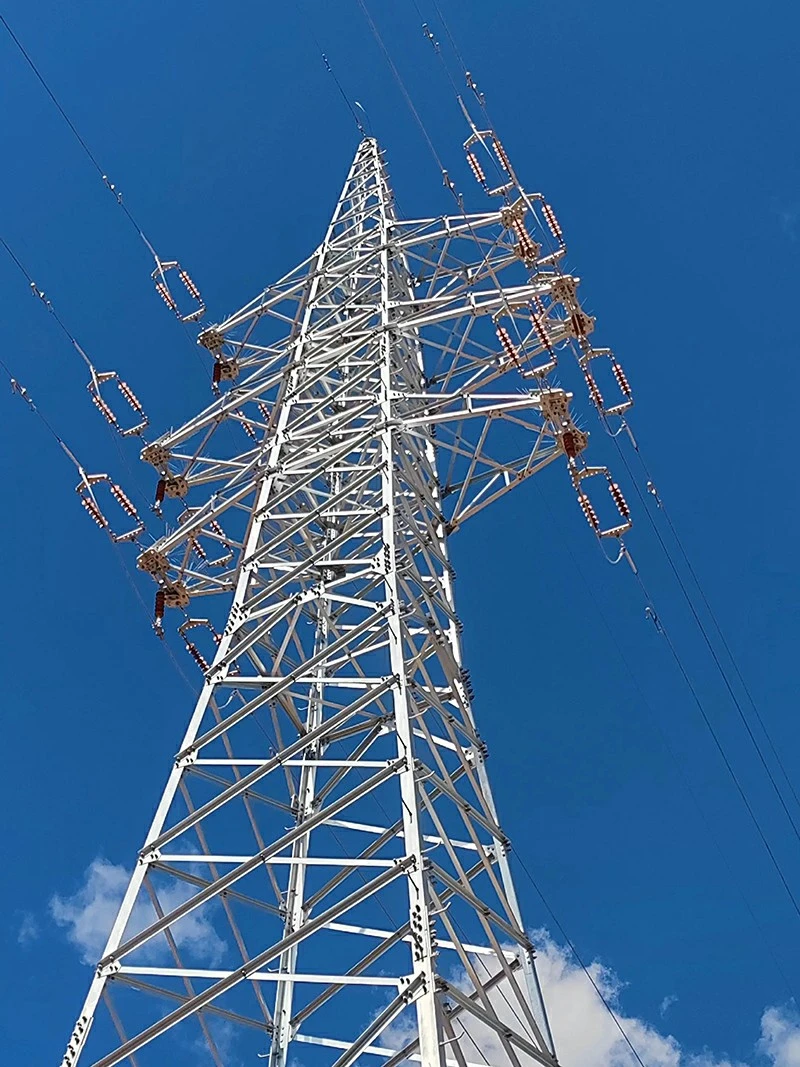
The lightning energy guiding mechanism of this structure relies on its electrical connection characteristics. The angle steel components are fastened together with bolts or welded to form a continuous conductive path, and the entire tower constitutes a lightning arrester system. When the electric field strength between the thundercloud and the ground reaches a critical value, the top of the tower preferentially generates an upward leader due to the tip effect, which forms a discharge channel after contacting the downward leader. When current passes through the tower, its distribution is affected by the skin effect. High-frequency lightning current mainly flows along the surface of the angle steel, which gives the angle steel a larger effective conductive surface area compared to round steel. The grounding system uses a combination of radial horizontal grounding electrodes and vertical grounding electrodes to disperse the current into the deep soil. The grounding resistance value usually needs to be controlled below 10 ohms to meet lightning protection specifications.